Building a home on the ocean floor
A base turns an underwater world from a place you visit into a place you live. This guide walks through choosing a site and growing your first base in sensible stages.
Why a base changes everything
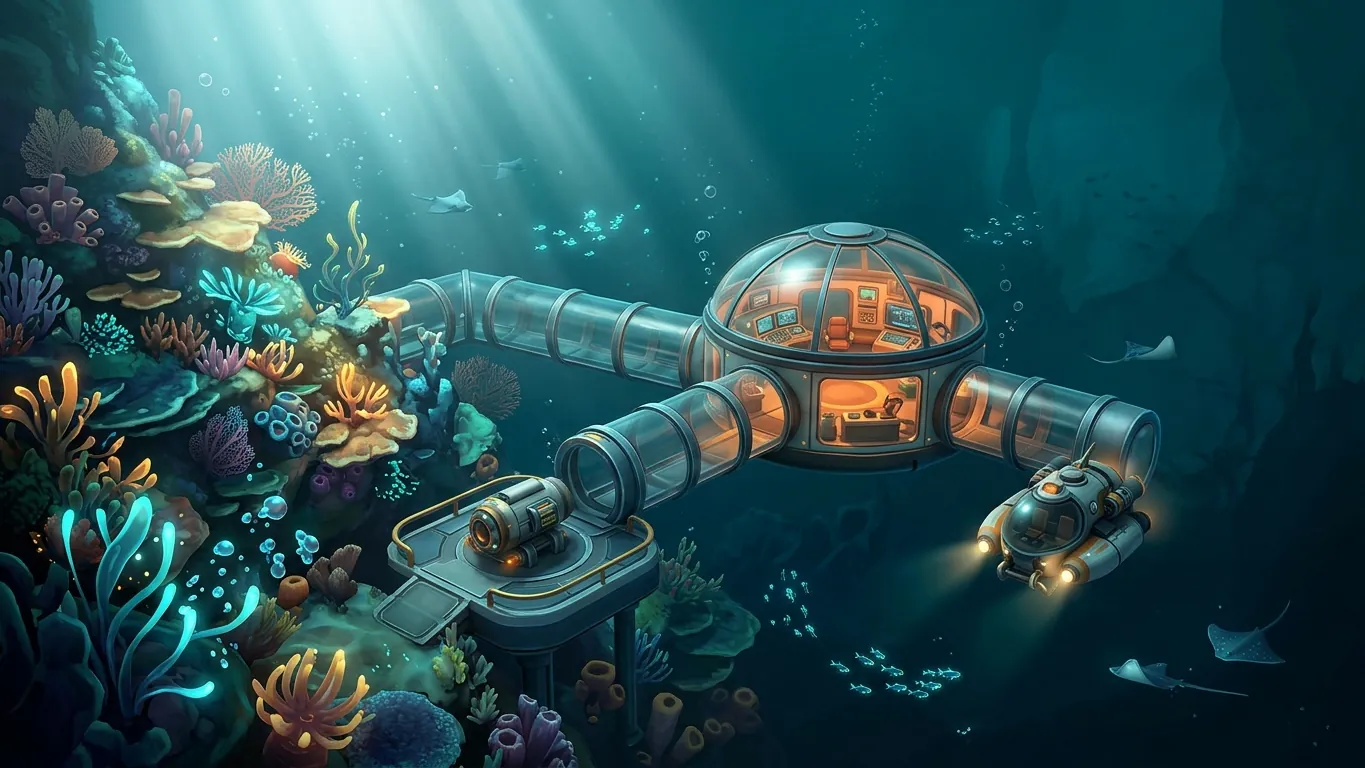
In games that include base building, your first habitat is often a turning point. Before it, every dive starts and ends at a fixed point. Afterward, you have a place of your own to store materials, craft equipment, refill air and plan the next expedition.
A good base also shortens your trips. Instead of swimming back to a distant starting area, you can return to a spot close to the resources and regions you care about. Later, additional outposts can extend your reach even further into deep or remote areas.
There is an emotional side too. A lit window in dark water becomes a landmark that means safety, and many players find that coming home after a long dive is one of the most satisfying moments in the genre.
Choosing a site with care
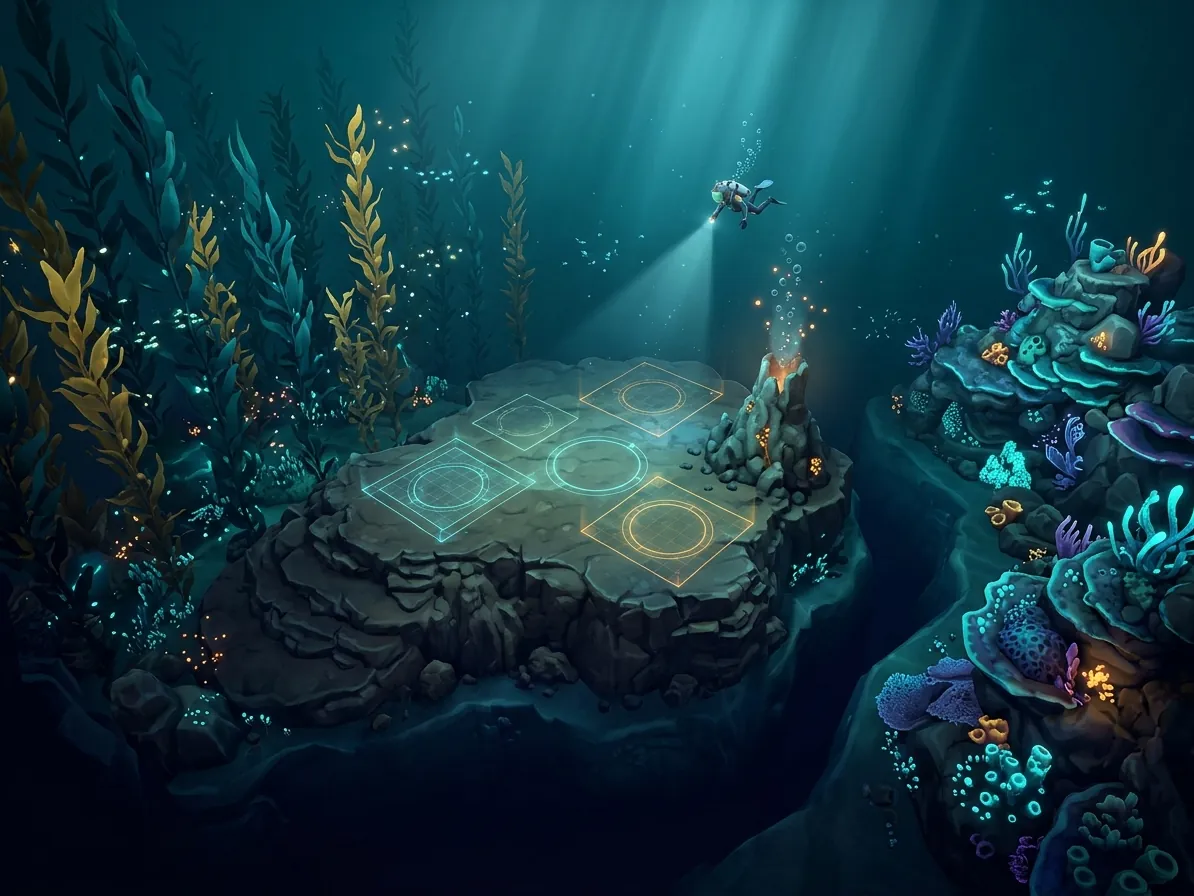
Location matters more than size. Look for a spot that balances safety, access to resources and convenience. Shallow areas are usually easier to build in and often have more natural light, though deeper sites may sit closer to valuable materials.
Consider how far the site is from places you visit often. A base near the center of your usual routes saves time on every trip. Check for nearby hazards, such as aggressive creatures or strong currents, and think about whether you need open space for future expansion.
In games where power comes from the environment, such as sunlight or heat from vents, the site may also determine how easily you can keep the lights on. Spend a dive or two scouting before committing.
Building in sensible stages
Growing a base gradually helps you avoid wasting scarce materials.
- 01
Start with a core room
Build a small shelter that provides air and a place to stand inside.
- 02
Add storage
Place containers early so you can stop carrying everything on every dive.
- 03
Set up power
Install a power source suited to the site so equipment can run reliably.
- 04
Bring in crafting
Add workbenches or fabricators so upgrades happen at home.
- 05
Expand with purpose
Add new rooms only when they solve a real need you have noticed.
Power, light and comfort
In many games, a base depends on power for air, lighting and equipment. Understanding how your chosen game generates and stores energy is worth the effort early on. Some sources depend on time of day or depth, so a setup that works in shallow water might struggle deeper down.
Light is both practical and atmospheric. A well-lit interior is easier to navigate and feels welcoming, while exterior lights can make your base easier to find on the way back from a long dive. Large windows or observation rooms, where available, let you watch the surrounding ocean and often become favorite spots.
Comfort may seem cosmetic, but small touches such as organized storage and clear room layouts make returning to the base calmer and more efficient.
Expanding without overreaching
It is easy to get carried away once building becomes possible. A sprawling base can drain materials and power that might be better spent on equipment upgrades. Before adding a room, ask what problem it solves.
As your expeditions move deeper, consider small outposts instead of stretching a single base. A compact shelter with air and a little storage near a distant region can be more useful than another wing at home. Over time, a network of modest bases can make the whole ocean feel within reach.
Related articles
 Wonder and unease beneath the waves
An opinion piece on why the deep sea works so well in games: darkness, silence, scale and the mix of wonder and unease that draws players back.
Read more
 Your first descent: a primer on underwater exploration games
New to underwater exploration games? Learn the core loop, the systems you will meet on every dive and how to pace your first expeditions.
Read more
 Make every breath count on your next expedition
Practical tips for managing oxygen, depth limits and turnaround points in underwater exploration games so your expeditions end on your terms.
Read more