Oxygen
A limited air supply acts as the main timer on every dive. Upgrades, tanks or vehicles typically extend it.
A calm introduction to the genre for newcomers, covering the core loop, the systems that shape every dive and how to approach the unknown without feeling overwhelmed.
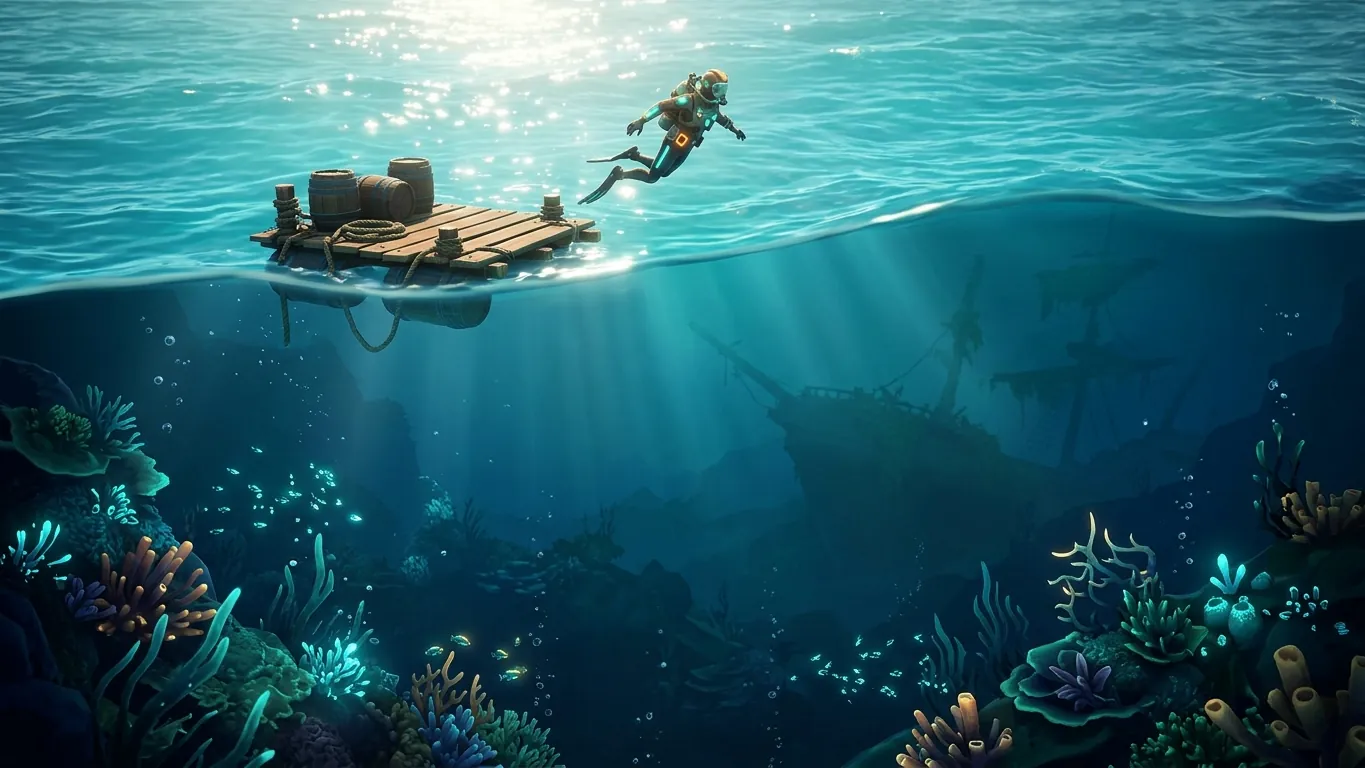
Most games give you solid ground to stand on. Underwater exploration games take it away. You move in three dimensions, drift with currents and constantly think about what is above and below you, not just ahead.
The genre usually trades combat intensity for atmosphere and discovery. Instead of clearing waves of enemies, you read the environment: the color of the water, the slope of the seabed, the shapes of rock formations and the faint glow of life in the dark. Danger often comes from the environment itself, such as running low on air, losing your way or venturing deeper than your equipment allows.
This makes the genre especially rewarding for players who enjoy curiosity, planning and a slower, more reflective pace. It can also feel intense in a different way, because the threat is quiet and you are often alone.
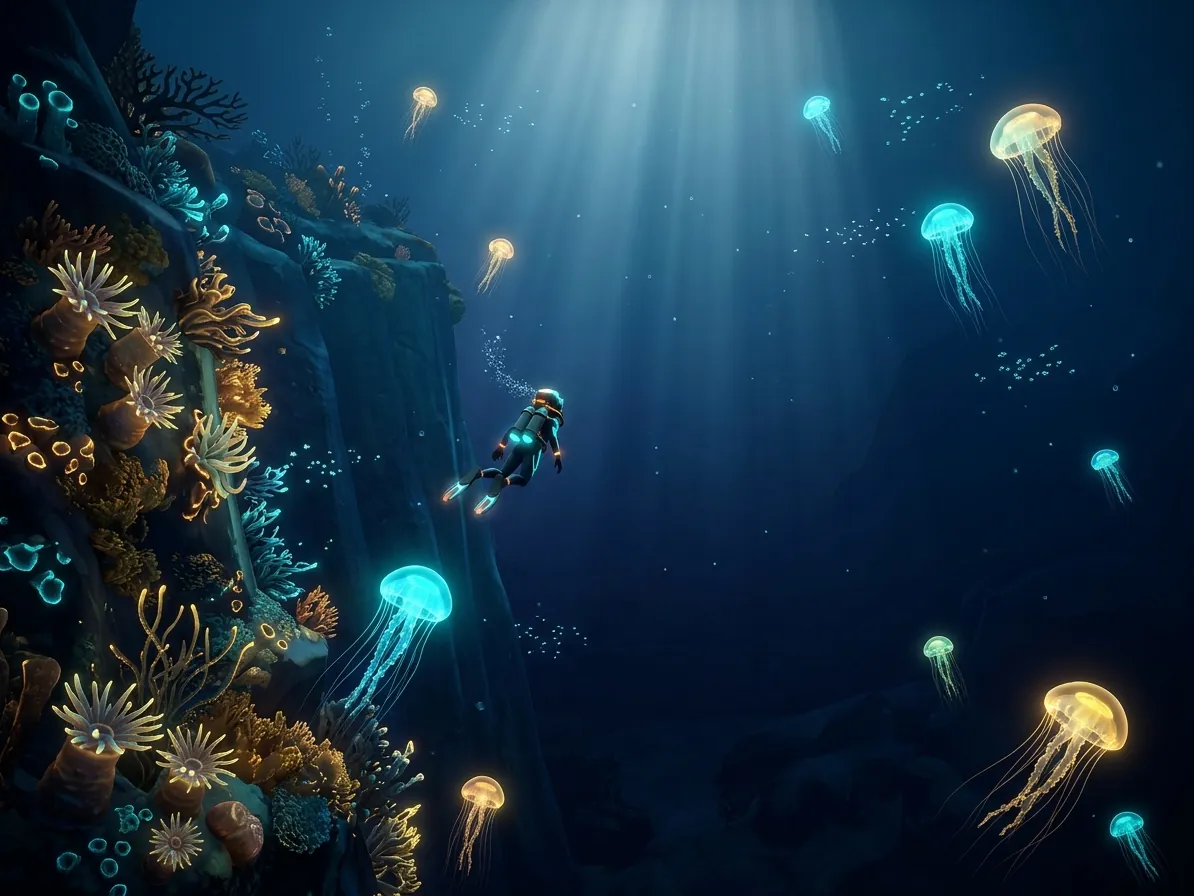
Almost every underwater exploration game is built around a simple cycle. You prepare at a safe point, dive out to explore, gather resources or information, and return before your supplies run out.
Each trip teaches you something. You might find a new material, spot the edge of an unexplored region or notice a signal coming from somewhere deeper. Back at safety, you use what you collected to craft better equipment, which lets you go a little farther next time.
Understanding this loop takes a lot of pressure off. You are not expected to see everything on your first trip. Short, purposeful dives that bring something useful back are usually more productive than long, aimless swims that end in a scramble for air.
Names and details differ between games, but these systems appear again and again in the genre.
A limited air supply acts as the main timer on every dive. Upgrades, tanks or vehicles typically extend it.
Equipment and vehicles often have safe depth limits. Going beyond them can cause damage or block progress.
Deeper water gets darker. Flashlights, flares and vehicle lamps shape what you can see and how safe you feel.
Carrying space is limited, so choosing what to bring and what to collect becomes part of the strategy.
Beacons, scanners and landmarks help you find your way back and mark places worth returning to.
Early on, it helps to stay close to your starting area. Shallow regions are usually designed as a gentle classroom, with bright water, plentiful basic resources and fewer hazards. Spend time here learning how movement feels, how quickly your air drains and how crafting works.
Resist the urge to rush toward the first dark trench you see. Many games deliberately place intriguing landmarks just beyond what early equipment can handle, so you have something to look forward to. Make a mental note or place a marker, then come back when you are ready.
It also helps to set one small goal per dive, such as collecting a specific material or checking one cave entrance. Small goals keep you focused and make it easier to turn back on time.
Part of the appeal of this genre is not knowing what is out there. That uncertainty can be exciting, but some players find it stressful, especially in dark or deep areas. If the atmosphere becomes uncomfortable, many games offer settings for brightness, audio or difficulty that can make the experience gentler. Taking breaks is a perfectly reasonable choice too.
Over time, the unknown tends to become familiar. Regions that once felt threatening turn into places you know well, with routes and landmarks of your own. That gradual shift, from fear to understanding, is one of the most satisfying arcs the genre offers, and it begins with a single careful dive.
 Make every breath count on your next expedition
Practical tips for managing oxygen, depth limits and turnaround points in underwater exploration games so your expeditions end on your terms.
Read more
 Tracking down the stations hidden on the seabed
A guide to locating sunken stations in underwater games: reading terrain, following signals, planning search patterns and entering flooded sites safely.
Read more
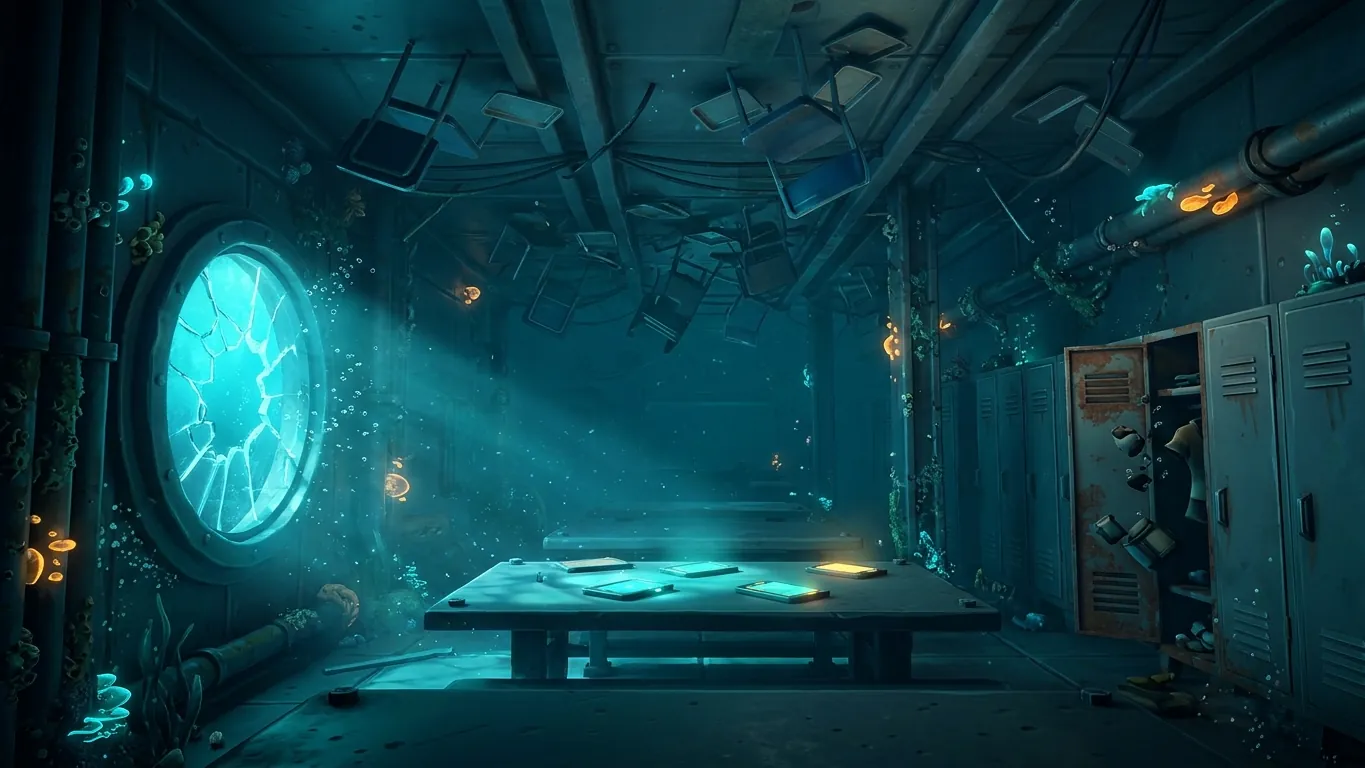 Every flooded corridor has a story to tell
How underwater games tell stories through logs, room layouts and wreckage, and how to piece together what happened inside a sunken station.
Read more