Make every breath count on your next expedition
Oxygen and depth are the two forces that shape every underwater expedition. These tips help you plan dives that go farther and end with a calm return instead of a desperate swim.

Treat oxygen as your real clock
In most underwater games, oxygen is the true measure of time. It does not matter how many resources you have spotted if you cannot reach them and get back before your air runs out.
A helpful mindset is to think of your air in terms of distance rather than seconds. How far can you swim out and still return comfortably? Remember that the return trip often takes longer than the outward one, because you may be tired of searching, carrying items or retracing a winding path through caves.
Many games offer ways to refill air mid-dive, such as surfacing, using air pockets, vehicles or placed equipment. Learn where these are in each area you explore. They change the shape of what is reachable and can turn a risky trip into a routine one.
A simple pre-dive routine
Running through a short checklist before each dive reduces surprises and helps you focus on exploring.
- 01
Set one clear goal
Decide what this dive is for, such as gathering a material or scouting a specific area.
- 02
Check your equipment
Confirm your air capacity, light source and any tools you will need for the goal.
- 03
Clear inventory space
Empty items you will not need so you have room for what you plan to collect.
- 04
Note refill points
Recall where the nearest surface, air pocket or vehicle is along your route.
- 05
Decide your turnaround moment
Choose in advance the point at which you will head back, regardless of what you find.
Reading depth and pressure limits
Depth is the second invisible boundary. Many games give suits and vehicles a safe operating depth. Exceed it and you may take damage, see warning effects or simply be unable to continue.
Pay attention to how the environment communicates depth. Water color usually shifts from bright turquoise to deep blue and then near black. Plant life changes, light from above fades and new kinds of creatures appear. These visual cues are often your first warning that you are approaching the limits of your current gear.
When you see a region that is clearly too deep, treat it as a goal rather than a challenge to push through right now. Marking it and returning with upgraded equipment is usually far less frustrating than attempting it early.
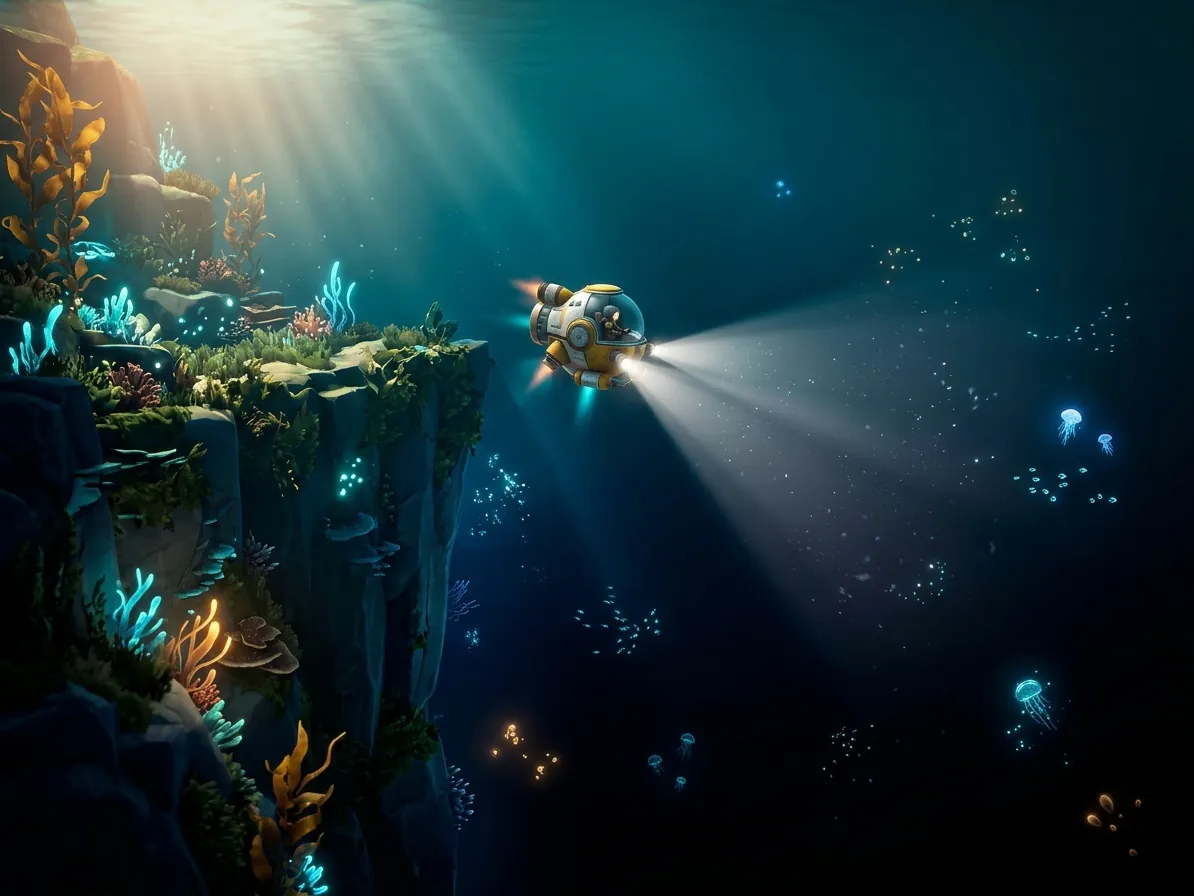
Turnaround points and the half-tank habit
A classic habit among cautious players is to start heading back once roughly half of the air supply is used, unless a reliable refill point is closer ahead than behind. It is not a rule built into any game, but it builds in a margin for wrong turns, slow swimming or unexpected obstacles.
As you grow familiar with an area, you can adjust this margin. Well-known routes need less buffer than unexplored caves. In tight spaces with low visibility, a larger margin is usually wise, because getting turned around is much easier there.
Whatever margin you choose, the important part is deciding before you dive. In the moment, it is tempting to swim just a little farther toward something interesting.
When a dive goes wrong
Sometimes, despite good planning, air runs low far from safety. Stay calm and head toward the nearest known refill point, even if it is in an unfamiliar direction. Swimming straight up is often a reliable option in open water, but it may not work inside caves or under overhangs.
After a difficult dive, take a moment to think about what happened. Was the route longer than expected? Did you get distracted? Each close call is useful information for planning the next expedition, and over time those lessons turn into instinct.
Related articles
 Tracking down the stations hidden on the seabed
A guide to locating sunken stations in underwater games: reading terrain, following signals, planning search patterns and entering flooded sites safely.
Read more
 Every flooded corridor has a story to tell
How underwater games tell stories through logs, room layouts and wreckage, and how to piece together what happened inside a sunken station.
Read more
 Building a home on the ocean floor
How to choose a site, build in stages and manage power and light when planning your first underwater base in exploration and survival games.
Read more