Wonder and unease beneath the waves
Why do so many players feel drawn to dark, deep water in games, even when it makes them nervous? This essay explores the design ideas behind that pull.
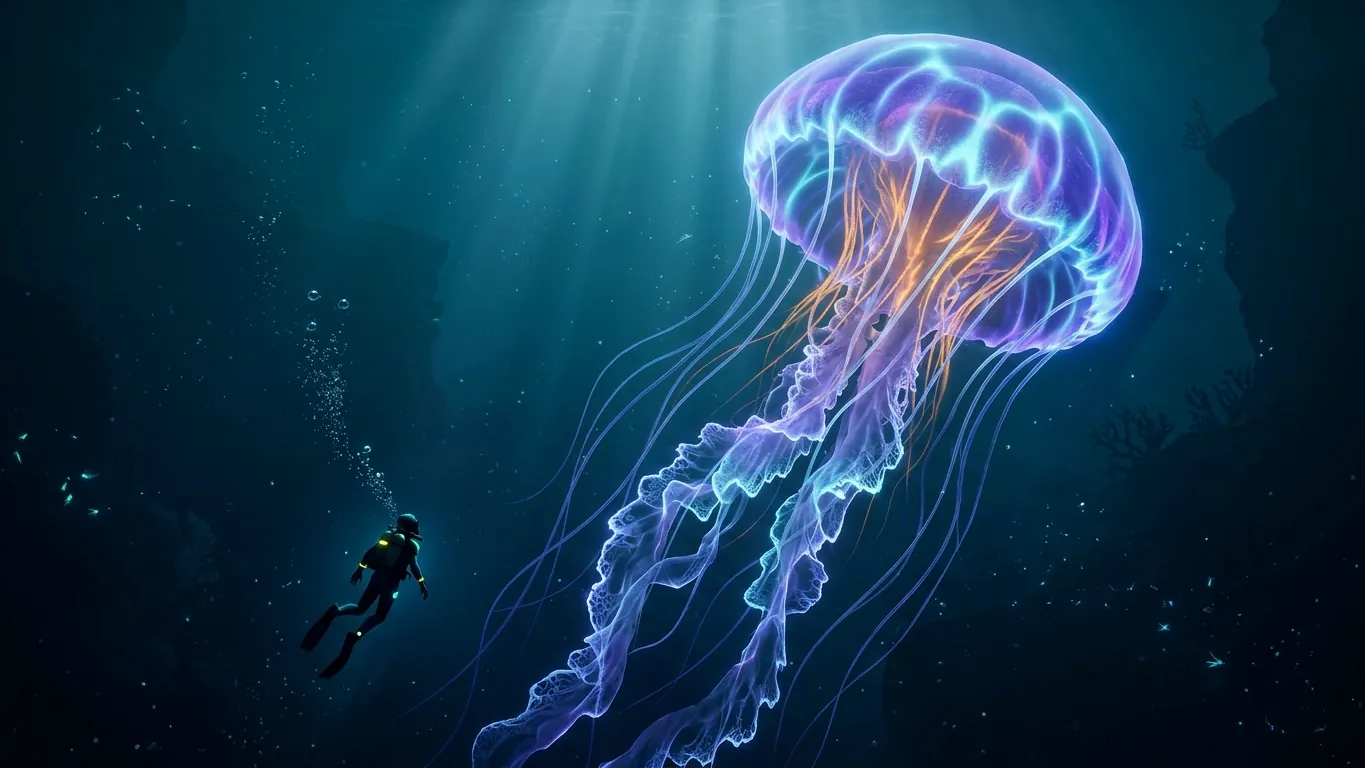
Fear of what lies beyond the light
Few settings in games play on curiosity and caution as effectively as the deep ocean. On land, players can usually see the horizon. Underwater, visibility shrinks quickly, and beyond a certain distance everything dissolves into blue and then into black.
That limited view is a powerful design tool. It means something could always be just out of sight. Even when nothing dangerous is nearby, the possibility alone keeps players alert. In our view, this is why underwater games can feel tense without needing constant threats. The darkness does much of the work.
Interestingly, the same uncertainty that unsettles players is also what tempts them forward. The edge of visibility is where discoveries wait.
Silence as a design tool
Underwater soundscapes are usually muted. Breathing, bubbles, distant groans of metal and the hum of a vehicle replace the noise of most game worlds. This quiet makes small sounds feel significant. A faint echo or an unexpected creak in a flooded station can carry more weight than a loud explosion elsewhere.
Silence also gives players room to think. Without constant music or chatter, exploration becomes contemplative. You notice the way plants sway in the current or how light flickers on the seabed. For many players, that calm is the main attraction, a kind of meditative focus that is hard to find in faster genres.
We think the best underwater games balance this quiet carefully, letting it soothe at times and unsettle at others.
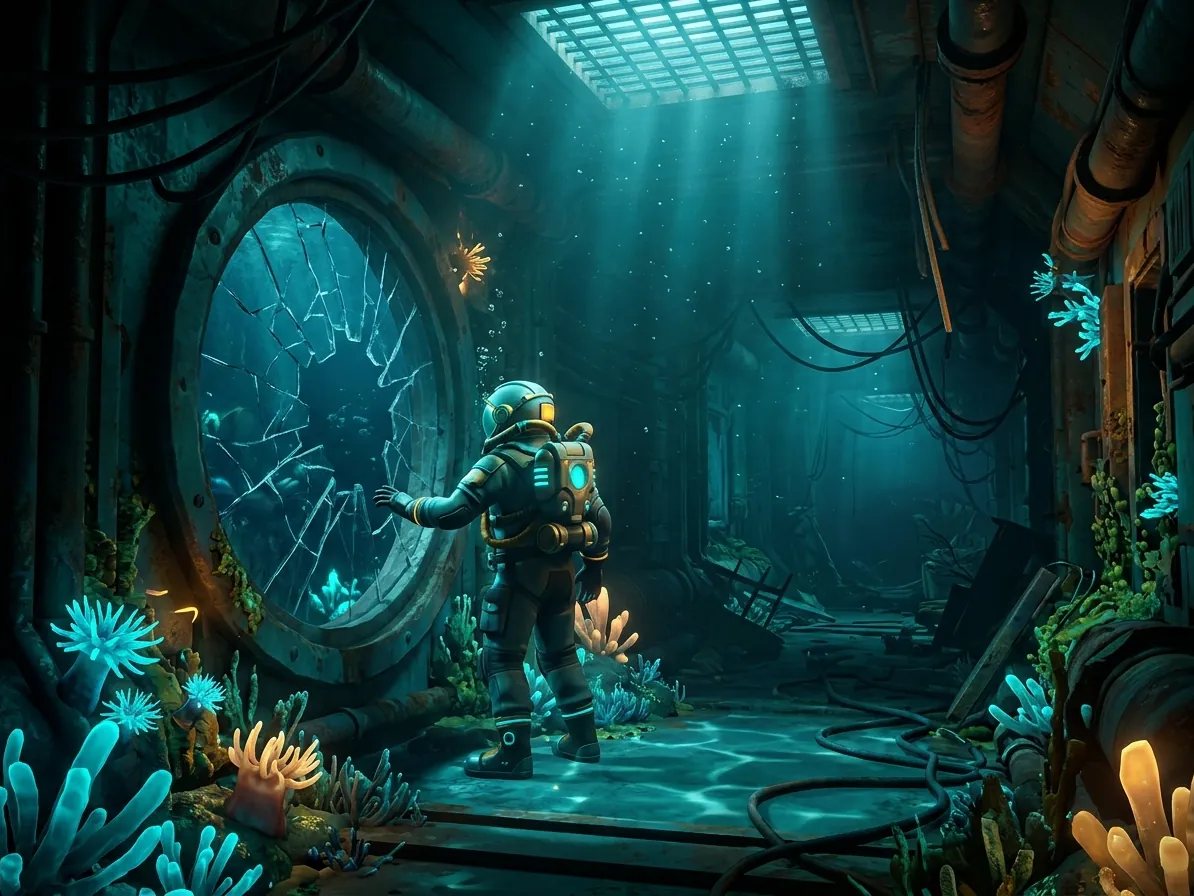
Scale and the feeling of smallness
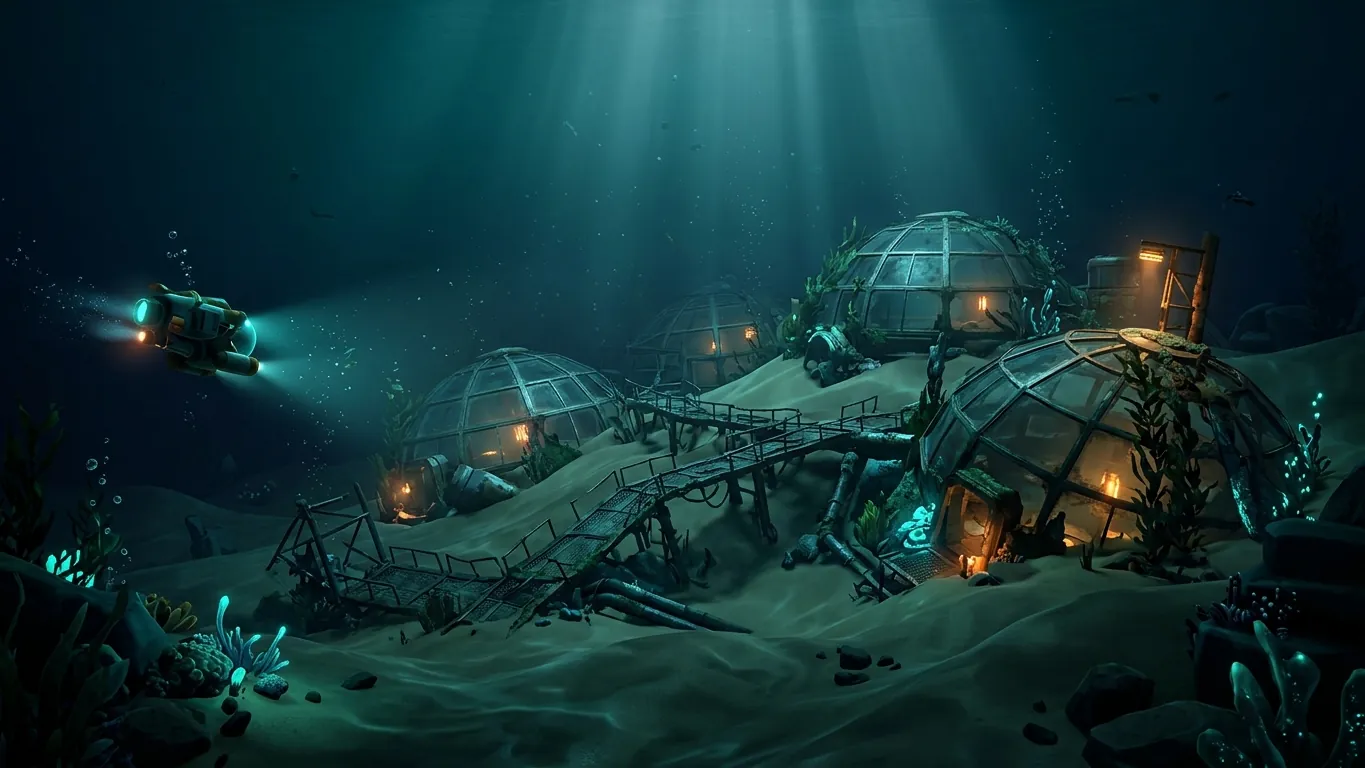
The ocean in games is often presented as vast. Huge trenches, towering rock formations and enormous creatures emphasize how small the player really is. Sunken stations reinforce this: structures that once housed people are now dwarfed by the environment that swallowed them.
This sense of smallness can be humbling rather than frightening. It reminds players that they are visitors in a world that does not revolve around them. Progress, then, feels earned. Each upgrade or new route represents a slightly larger share of a place that will never be fully tamed.
We find this one of the most distinctive qualities of the genre. Many games make players feel powerful. Underwater games often make them feel brave instead.
Wonder sits right beside dread
It would be a mistake to describe the deep only through fear. The same regions that feel threatening are often the most beautiful. Bioluminescent forests, glowing creatures and alien landscapes give players moments of genuine awe.
That mix seems to be the secret. Pure tension would be exhausting, and pure beauty might feel empty. Together they create an emotional rhythm: unease as you descend, wonder as something remarkable comes into view, relief as you return to safety. Players who find darkness uncomfortable can often adjust brightness or audio settings to enjoy the wonder with a little less dread.
Why the descent keeps pulling players back
Ultimately, the deep ocean taps into a simple human impulse: wanting to know what is down there. Games let players satisfy that curiosity safely, one careful dive at a time.
Every abandoned station is a question, and every trench is a promise of something new. As long as there is a darker layer below the one you have explored, there is a reason to suit up again. That, in our opinion, is why the genre endures and why so many of us keep diving back in.
Related articles
 Your first descent: a primer on underwater exploration games
New to underwater exploration games? Learn the core loop, the systems you will meet on every dive and how to pace your first expeditions.
Read more
 Make every breath count on your next expedition
Practical tips for managing oxygen, depth limits and turnaround points in underwater exploration games so your expeditions end on your terms.
Read more
 Tracking down the stations hidden on the seabed
A guide to locating sunken stations in underwater games: reading terrain, following signals, planning search patterns and entering flooded sites safely.
Read more